

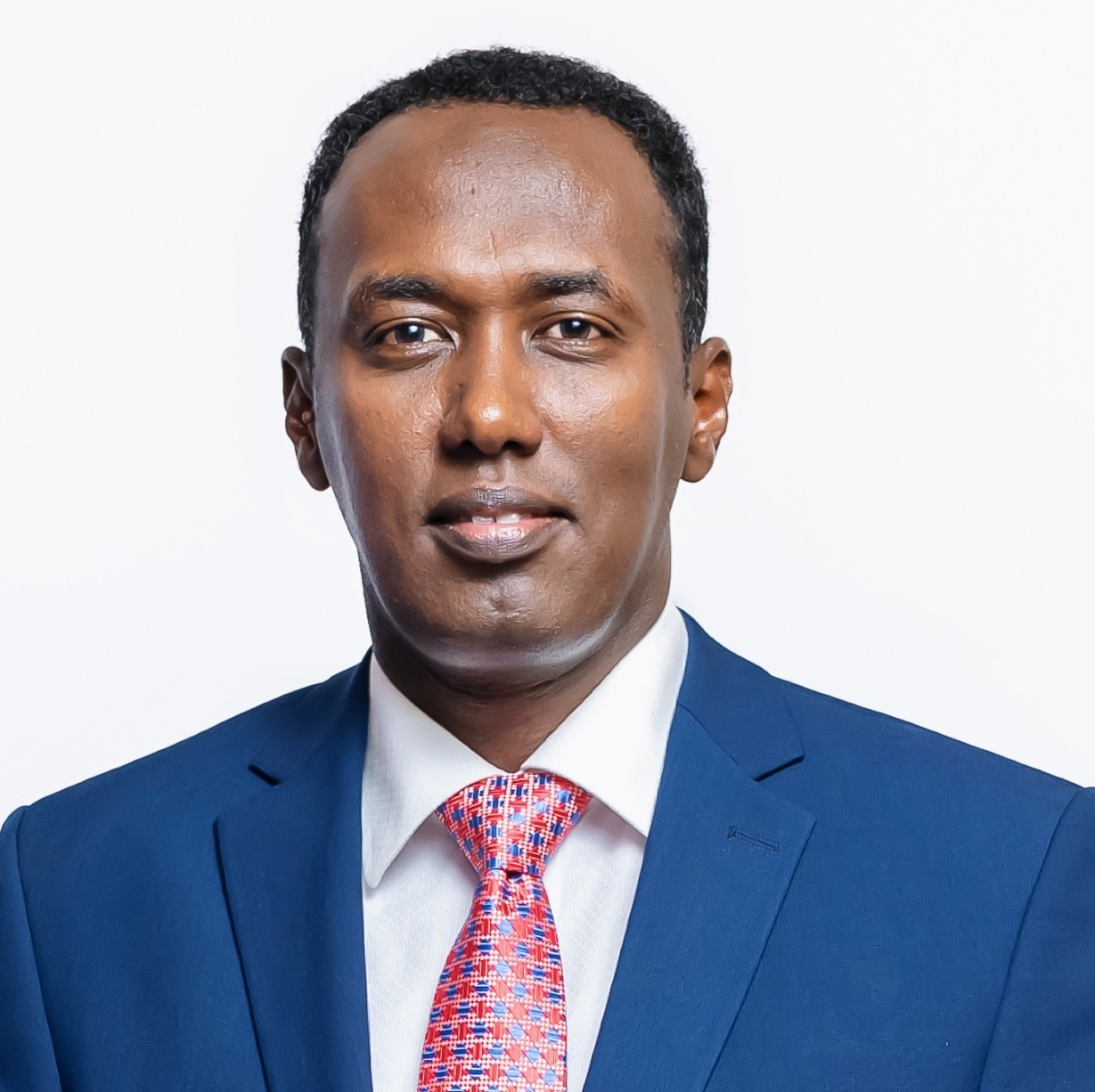
Dr. Guled Salah is a Somali scholar and practitioner specializing in governance and development, and the author of Federalism Imperative in Post-Conflict Africa: The Case of Somalia. His research focuses on federalism, institution-building, and post-conflict state formation. He holds a PhD from the United Nations University for Peace. Dr. Guled served as Chair of the Puntland Transitional Electoral Commission, where he led the first direct local elections in the region in over five decades. He is the founder and former Executive Director of the SIDRA Institute, a leading policy thinktank, and previously served as Puntland’s Minister of Environment and Climate Change. He has also worked with United Nations agencies in Somalia and lectured at East Africa University.
Abstract
Post-conflict societies face the challenge of rebuilding institutions and restoring public trust in contexts defined by overlapping risks that overwhelm state capacity. This article draws on the Puntland experience in Somalia to show how fragile institutions can transition toward resilience. Reforms in environmental governance and electoral management demonstrate the effectiveness of six interlinked pillars: legal foundations, systems development, merit-based recruitment, resource mobilization, inclusivity, and adaptive management. These measures enabled Puntland to pioneer environmental policies and conduct the first direct local elections in 50 years. The case highlights that resilience in fragile federal contexts depends less on imported models and more on sequenced reforms, institutional credibility, and locally owned processes. Lessons from Puntland provide practical strategies for Somalia’s federal project and other post-conflict states.
Introduction
Post-conflict societies face the dual challenge of rebuilding institutions and restoring public trust. As the OECD’s States of Fragility 2022 highlights, fragility is not defined only by conflict but by overlapping risks—political, societal, economic, environmental, and security—that overwhelm state capacity (OECD, 2022). Such contexts are marked by weak governance, fragile legal systems, depleted human capital, scarce resources, and limited legitimacy, leaving states unable to enforce rules or deliver services, thus perpetuating cycles of mistrust and instability.
Institutional resilience, by contrast, is the capacity of state institutions to enforce rules, adapt to change, and deliver public goods even amid instability. North, Wallis & Weingast (2009) argue that lasting peace depends less on external interventions than on building credible, rules-based institutions that constrain arbitrary power. State-building must therefore create institutions that are stronger, inclusive, and adaptive—not simply restored to their pre-war form.
Somalia’s federal system illustrates both the opportunities and difficulties of this fragility–resilience continuum. Federalism can encourage innovation at state level while diffusing risks across governance tiers. Puntland, one of Somalia’s founding federal states, has enjoyed relative stability yet still faces institutional fragility. My experience as Minister of Environment (2014–2015) and later as Chair of the Transitional Puntland Electoral Commission (2019–2022) shows that reform is possible. Despite their very different mandates, both sectors applied consistent principles of reform, offering replicable lessons for other federal states and the national government.
These experiences highlight the practical complexities of institution-building in fragile settings, where imported “best practice” models often fail to reflect local realities.
Institutional Reform in Action: Two Stories of Change
Puntland’s experience in environmental governance and electoral reform demonstrates how fragile institutions can be transformed when guided by a deliberate strategy. Progress rested on six interlinked pillars: establishing legal foundations to define mandates and prevent interference; developing systems for accountability and continuity; recruiting on merit to replace patronage with competence; mobilizing resources to match ambition with capacity; embedding inclusivity to build trust; and applying adaptive management to respond to evolving challenges.
Together, these pillars created institutions that were legally defensible, operationally credible, and socially legitimate, capable of sustaining reform beyond individual leaders. The following sections elaborate on these pillars.
- Legal Anchors as the First Pillar of Institutional Reform
When I assumed office as Minister of Environment (2014–2015), the ministry was still in its infancy: underfunded, understaffed, and without a legal mandate. Budget allocations were irregular, leaving salaries unpaid for months, even as urgent challenges mounted: rampant deforestation from charcoal production, degraded rangelands threatening pastoral livelihoods, and unregulated resource exploitation destabilized communities.
In such fragile settings, the absence of legal frameworks exposes institutions to interference and political capture. Our priority was therefore to establish legal and policy foundations. Through a consultative process, we introduced Puntland’s first Environmental Policy, Environmental Act, Environmental Impact Assessment (EIA) Act, and Rangeland Management Policy (revised). These instruments clarified mandates, set standards, and anchored the ministry’s work in law.
The same approach guided my later role as Chair of the Transitional Puntland Electoral Commission (2019–2022). Burdened by public mistrust after two failed predecessors, the commission faced extreme fragility. To restore legitimacy, we advanced a robust legal framework covering voter registration, political finance, data protection, and inclusive participation. These measures provided clarity, accountability, and alignment with federal–state responsibilities, enabling Puntland’s first direct local elections in 50 years.
Comparative evidence shows that institutions anchored in clear legal frameworks are more resilient—able to resist elite capture, maintain continuity, and engage credibly with international partners (Ostrom, 1990). In Puntland, this legal credibility attracted bilateral and multilateral support, demonstrating that legal anchoring is not a mere technical step but the foundational pillar of institutional resilience in post-conflict environments.
- Systems Development and Institutionalization
Legal frameworks alone are not enough. Resilient institutions also need systems that guide operations, enforce accountability, and enable adaptive planning. At the Ministry of Environment, we introduced planning cycles, procurement controls, operational guidelines, and data systems. These measures created predictability and professionalism, ensuring continuity despite leadership changes or political turbulence.
In fragile contexts, the absence of such systems often breeds reliance on individuals or donor-driven projects. Our experience showed that codified procedures, whether in procurement, reporting, or monitoring, are essential for continuity. As Grindle (2004) argues, progress comes from the gradual evolution and consolidation of institutions and state capabilities—prioritizing and sequencing reforms in context—rather than relying on technical, one-off fixes. Building systems accordingly moved the ministry from ad-hoc firefighting toward more structured policy delivery.
The same approach guided the Transitional Puntland Electoral Commission (TPEC), which began with only three staff, minimal resources, and public mistrust. Building systems such as voter registration databases, data protection protocols, and transparent procedures for auditing and dispute resolution were key to restoring credibility and reassuring citizens that elections would be impartial and rules-based. This demonstrated that institutions thrive not on charismatic leadership alone but on institutionalized systems that endure political turbulence.
- Meritocracy over Patronage
A recurring barrier in fragile contexts is the dominance of patronage networks, where appointments are driven by clan or loyalty rather than competence. Breaking this cycle was among the most transformative reforms. In both the Ministry of Environment and TPEC, recruitment was competitive, attracting young, skilled professionals motivated by merit rather than connections.
This shift signaled fairness, boosted morale, and strengthened execution capacity, as staff selected for their skills were better equipped to deliver results. It also created a durable talent pipeline, with many recruits still serving today, ensuring continuity.
International evidence reinforces this lesson: sustainable capacity in fragile states depends less on ad hoc training and more on institutionalized, merit-based recruitment systems (Brinkerhoff, 2007; UNDP, 2009). By embedding meritocracy, Puntland demonstrated how fragile institutions can nurture a new generation of public servants committed to performance and public legitimacy rather than patronage. For example, several young graduates recruited competitively during my tenure are still in public service today, illustrating how early merit-based reforms generate long-term dividends.
- Resource Mobilization and Sequenced Credibility
Financial fragility often cripples post-conflict institutions. With unreliable budgets and weak revenue bases, institutions depend on donors, undermining autonomy. Our experience showed the importance of sequencing: first build credibility through legal frameworks, systems, and skilled staff, then leverage that credibility to mobilize resources.
In the Ministry of Environment, once policies and systems were in place, we secured sustained support from bilateral and multilateral donors. Similarly, in the electoral sector, the adoption of clear policies unlocked new partnerships with international stakeholders. Resource mobilization thus became more than funding, it signaled seriousness and built trust. In this way, financial support followed credibility rather than preceding it, demonstrating the value of building institutional strength first.
- Legitimacy through Inclusivity and Social Mobilization
Perhaps the most critical pillar of resilience is legitimacy. Institutions without public trust, regardless of funding or legal structure, cannot endure. In Puntland, community engagement became central to building both compliance and trust.
In the environmental sector, inclusive consultations and awareness campaigns supported rangeland protection and anti-charcoal measures. In the electoral sector, deliberate inclusion of women, youth, minorities, and persons with disabilities in policymaking and participation strengthened fairness. Transparency in decision-making, openness in resource use, and fairness audits further reinforced public confidence.
International evidence confirms this: in fragile contexts, legitimacy arises from both performance and perceptions of fairness, inclusivity, and participation (International IDEA, 2014). By rooting institutions in their communities, Puntland showed that resilience is sustained not just by technical strength but by a renewed social contract.
- Adaptive Management and Iterative Learning
Another defining feature of Puntland’s reforms was adaptive management. Instead of rigid blueprints, we applied a Problem-Driven Iterative Adaptation (PDIA) approach: starting with locally identified problems, testing small solutions, learning quickly, and scaling up.
For example, environmental impact assessments (EIAs) were first piloted on a small scale before becoming system-wide practice. In elections, voter registration and early pilot elections were tested in select districts before expansion. These feedback loops enabled rapid learning and reduced the risks of large-scale failure.
This aligns with comparative evidence showing that in fragile contexts, “best fit” approaches rooted in local realities and iterative experimentation outperform imported “best practice” models (Andrews et al., 2017). This culture of experimentation meant that setbacks became learning opportunities rather than failures, strengthening institutional adaptability.
Key Takeaways from the Two Reform Journeys
The experiences in both the Ministry of Environment and the Transitional Puntland Electoral Commission highlight broader lessons that explain why certain reforms succeeded despite fragility.
- Reforms succeed when sequenced: Legal authority must come before enforcement, core staff capacity before scaling, and early wins before large-scale reforms. Sequencing creates momentum and reduces reversal risks.
- Credibility unlocks resources: Once institutions demonstrated fairness and reliability, they consistently gained domestic trust and international support.
- Systems endure beyond leaders: Durable progress came from codified procedures, data systems, and financial controls, not individual personalities.
- Inclusivity reduces backlash: Broad engagement, diverse staffing, and fairness checks reduced friction and pre-empted disputes.
- Local ownership anchors sustainability: External partners were essential, but reforms endured because they aligned with locally defined priorities.
Implications for Somalia’s Federalism
The Puntland experience carries important lessons for Somalia’s federal project. Its pioneering environmental frameworks, introduced before any comparable federal instruments, showed how state-level innovation can shape national governance. As the first post-collapse models of natural resource regulation, they demonstrated that in fragile contexts, federalism can emerge from the bottom up, with state-driven initiatives later harmonized across the federation. This remains critical in Somalia, where federal institutions are still evolving and rely heavily on member states for precedents.
Similarly, Puntland’s electoral reforms, culminating in the first direct local elections in 50 years, provided a home-grown model for inclusive democracy. By embedding policies on voter registration, party financing, gender representation, minority and disability inclusion, and data protection, the reforms enhanced legitimacy and public trust. Their success proved to other member states and to the federal government that credible elections are possible even under fragile conditions when grounded in law, merit, and citizen participation.
Together, these cases show that federalism is not only a constitutional design but a lived process of negotiated governance. State-level reforms, when legally anchored and inclusive, become federal building blocks, reducing fragmentation, fostering cooperation, and embedding accountability. Puntland’s journey demonstrates how federalism can move from paper commitments to practical mechanisms that sustain stability and development in post-conflict Somalia. In this sense, Puntland illustrates how federalism in fragile states is strengthened less by top-down directives and more by state-level experimentation that generates scalable lessons.
Conclusion
Institution-building in post-conflict federal contexts is a long-term, iterative process that requires vision, political commitment, and adaptability. The Puntland experience in environmental governance and electoral management demonstrates that meaningful reform is possible even in resource-scarce, politically fragile environments.
The six drivers distilled: anchoring institutions in law, embedding systems, prioritizing meritocracy, ensuring inclusivity, mobilizing resources, and embracing adaptive learning, offer a practical roadmap. These are not abstract lessons, rather, they are practical strategies forged through trial and error.
If sustained and replicated across Somalia’s federal member states, they can help transform fragile institutions into resilient pillars of governance, supporting peace, stability, and development nationwide. Ultimately, resilience is less a destination than an ongoing process of adaptation, one that Somalia’s federal institutions must continue to nurture if they are to overcome fragility.
References
Andrews, M., Pritchett, L., & Woolcock, M. (2017). Building State Capability: Evidence, Analysis, Action. Oxford University Press.
Brinkerhoff, D. W. (2007). Capacity development in fragile states. European Centre for Development Policy Management.
Grindle, M. S. (2004). Good enough governance: Poverty reduction and reform in developing countries. Governance, 17(4), 525–548.
International IDEA (2014). Electoral Management Design.
North, D., Wallis, J., & Weingast, B. (2009). Violence and Social Orders. Cambridge University Press.
OECD. (2022). States of Fragility 2022. Paris: OECD Publishing.
Ostrom, E. (1990). Governing the Commons. Cambridge University Press.
UNDP (2009). Capacity Development: A UNDP Primer.
Further Reading
DFID (2010). Building Peaceful States and Societies: A Practice Paper.
Fukuyama, F. (2013). What is governance? Governance, 26(3), 347–368.
OECD DAC (2007). Principles for Good International Engagement in Fragile States & Situations.